
One of my favorite songs growing up was “Hard Habit to Break” by Chicago. I would stand at the edge of my driveway, awaiting the school bus, and belt out the first verse and chorus as if I thought I could really sing. The bus always came before I could get to the second verse, which I’m sure the neighbors fully appreciated. I did this everyday for a while. It became, ironically, a habit to sing that song each morning. I didn’t even notice I was doing it.
Fast forward several decades, and I’m still spending the majority of my time completely unaware of habits and the power they hold in my daily life. Completely disregarding the patterns that trap me daily and frustrate me as I try to walk more closely with God.
I recently discovered a book on this subject by Charles Duhigg, a reporter for the New York Times, called The Power of Habit. 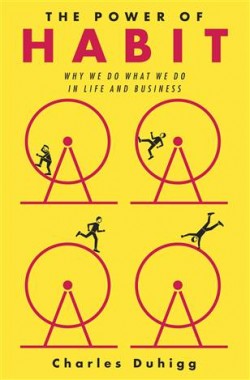 Duhigg quotes research from Duke University showing that more than 40 percent of the actions people perform each day were habits, not conscious decisions. He calls this alarming because we are thinking less when we’re in habit mode. “Our neurological activity literally decreases as the habit unfolds. That’s why the behavior feels so automatic, almost unconscious.”
The good news, according to Duhigg is that habits can be “ignored, changed or replaced.” And that understanding the structure of habits makes them easier to control. He lays out the structure of the habit loop: Cue. Response. Reward. Basically, there’s something that incites the habit into action. Then there’s our trained response to the stimulus. And finally, there’s the payoff. Whatever it is that we find rewarding about the behavior in question.
It’s interesting to break down the cycle in this way, because I typically go right to the behavior or habit itself and try to attack it head on. I don’t spend enough time understanding what the “reward” is for me, or just as importantly what provokes me, or triggers me to fall into the habit in the first place.
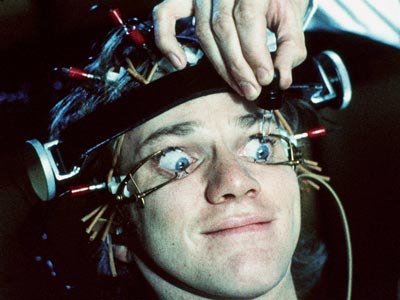 The second wrong turn I take when dealing with bad habits is that I try to remove them from the equation. I try to avoid them. Alter my course. I go the route of Clockwork Orange and try to torture them out of my being and rewire my brain to cause me physical pain at the mere thought of them. I have heard countless times from a variety of experts that it’s not enough to try and remove a negative.
Instead, you have to fill the space it occupies with a positive. You have to find something to replace it. This makes sense. The habit is somehow filling a void, providing some type of reward. Filling that need in a fruitful and appropriate way is the only path forward.
In the end, my natural tendency to jump straight to the response with no regard to the stimulus, and then self-administer aversion therapy to prevent actions from repeating themselves, typically gets me nowhere. But that’s yet another hard habit I’m trying to break.


 the way to (t)here
Leave a comment
Comments feed for this article