
We recently welcomed a new addition to our family of four. He’s a little cutie. A bit grumpy at times. Looks like potty training is completely out of the question, which is kind of a drag. His name is Cheeseball. And as far as lizards go, he’s pretty cool.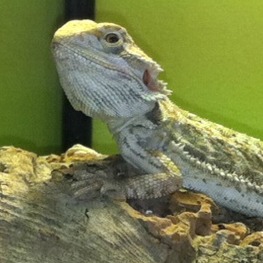
Cheeseball is a bearded dragon. My older son has been asking for a reptile of his own for quite some time. We finally relented once we realized it probably wasn’t a phase he was shaking anytime soon. It’s been fun watching Cheeseball (yes, my son named him) in his cage, trying to be a wild animal in a caged environment.
Since my wife doesn’t really get excited about the whole lizard thing, and the scales and crickets and clean up duty that come with it, I’ve been spending a lot of time with Cheesy. I’ve read an entire book on caring for beardies, researched on the Internet for proper handling, feeding and health techniques. I’m developing a great understanding of what makes these dragons tick, what their instincts are, why they act the way they do, what they really need to thrive.
All this has me thinking a little more deeply about myself, my needs, why I respond the way I do. Over the past year, I’ve become much more aware of my wounds and how those impact me. How I’ve responded to external stimulus in my environment. I’ve yet to pay as much attention to my natural instincts, those behaviors and reflexes and needs that just come built-in as part of the human package.
It’s important for Cheeseball to have a safe place to hide in his cage. It’s very distressing if he doesn’t have somewhere to retreat from danger. When you provoke Cheeseball, and he feels threatened, he will puff out his chin, open his mouth and hiss at you. Making himself appear larger and more dangerous than he really is. It’s important that he have access to light that provides warmth and vitamins. This includes a spot to bask in daily.
I could go on. There are lots of things I suddenly know about bearded dragons. But the point here is that I’ve been paying attention to all of these natural needs and/or responses in caring for our pet, while not taking any of these types of things into account as I think about myself, and specifically my spiritual walk.
We have an intelligent and intentional design. We are equipped with survival instincts and reflexes, as well as basic needs that we will strive to meet. And when our external environment goes as planned, a lot of these instincts and needs work just as the design intended. The problem is that we are constantly stressed by our environments, sometimes to the point of trying to be wild and free while caged and placed in an unnatural setting, either by our own actions or external forces beyond our control.
In a way, we are predictable as a result. No matter what our environment or circumstances throw at us, we respond based on our survival instincts. We pursue things in life based on the same set of needs.
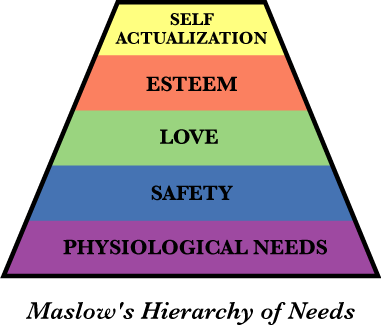
The important thing for me to consider here is that I have a set of survival instincts that can both help and hurt as I try to pursue a deeper relationship with God. I have basic needs that I’m designed to pursue and meet at all costs. And understanding that wiring is every bit as important as it is to be self-aware of my spiritual wounds.
Being aware of my natural instincts and response biases can help me break patterns or at least better understand what I’m feeling and how I’m reacting to a specific situation. Being more cognizant of all my needs, and not just my spiritual needs, will help me be more successful in my faith walk.
This means that seemingly unrelated things such as the food I put in my body, the amount of exercise I’m getting, the social connections I’m making to family and friends and a host of other variables all contribute to whether I can be effectively present in my pursuit of God.
We are intelligently and intentionally designed, which requires us to be consciously and consistently aware of this design. Taking some time to look through the glass and understand how the wild animal within us is wired. Tapping in to our inner dragons.


 the way to (t)here
Leave a comment
Comments feed for this article